
Most of us were never shown practical tips on crafting a unit that feels cohesive and makes us feel excited to teach it. So, I’m showing you exactly how I do it.
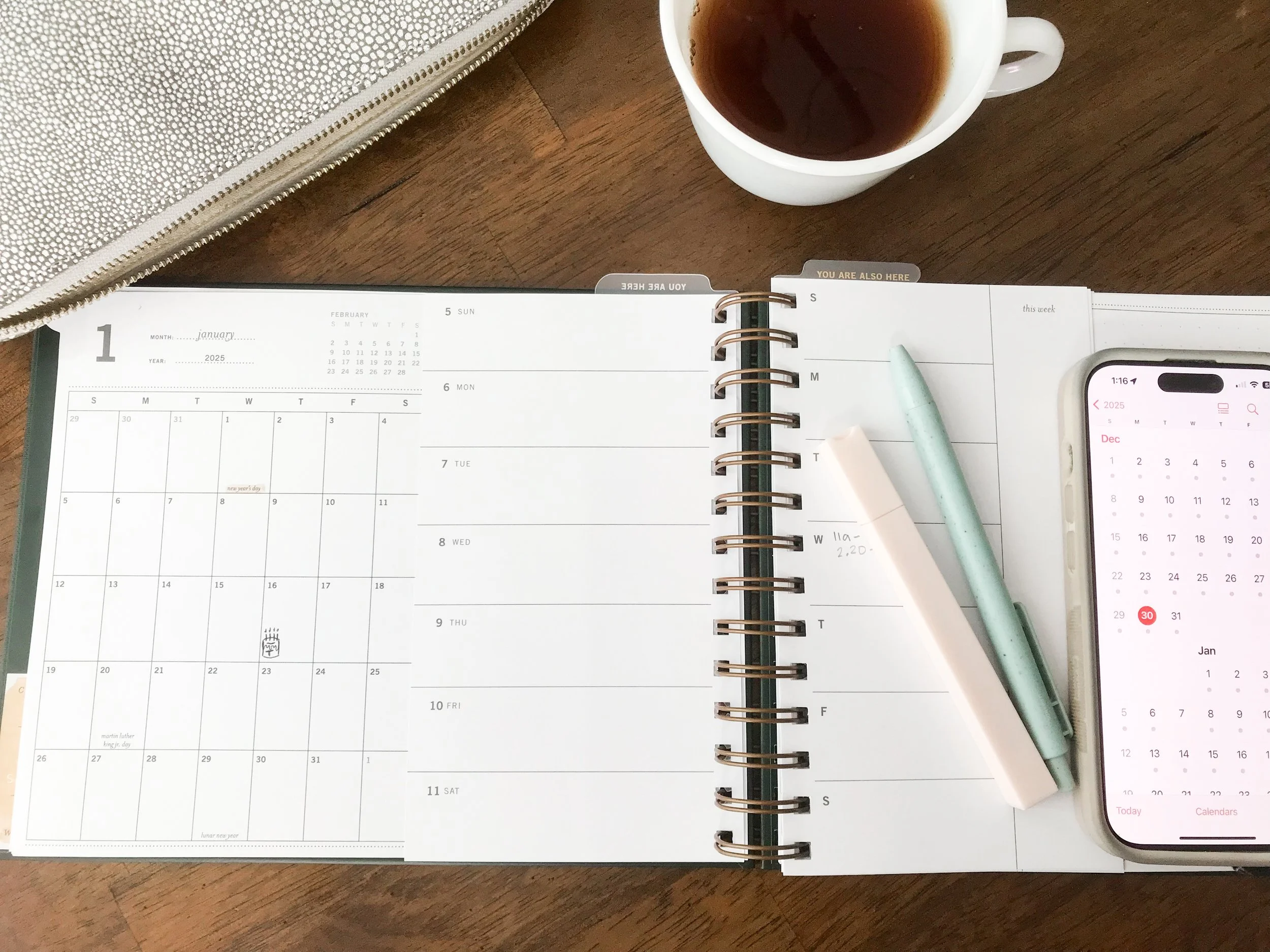
In my first few years as a high school teacher, here’s what an honest ‘planning session’ looked like for me. I’d come home from school, heave my depleted meatsack of a body onto the couch, open up my laptop, and figure out what the heck I was gonna do tomorrow. Sometimes I’d look at the textbook order, sometimes I knew the kids needed a break after a content-heavy week so I’d go searching for a fun activity, and my only goal was to keep my head afloat.
I look back proudly at that meatsack because she was just doing her best with the resources she had. And, eventually she figured out a much better system. Thank god.
Fast forward to my 10th year in education and I have a simple 7-step process in outlining a unit that really feels good to teach. And, there’s plenty of room for your favorite lab that you run and the annotation system you swear by. Because the thing about systems is they only really work when they’re flexible to fit who you are as a teacher.
That’s the YouTube video version of this blog in case you’re more of an audio/visual person.
HOW TO PLAN A UNIT IN HIGH SCHOOL, STEP BY STEP
Before we jump into it, there’s a few things you should have ready for easy reference:
Your school calendar of events
The textbook/novel/main text you’ll be using for this unit
Your teacher planner (and in case you needed a sign/permission to buy the cute paper planner, this is that sign. There’s nothing better than scribbling excitedly while sipping on your favorite bev.)
Step 1: Count your real instructional days
Pull up your school calendar first. Look for the school dance. Look for the assembly that eats two or three of your periods.
Those little things matter. I'd rather jot down those days as a catch-up day than plan a really important lesson on a day I lose.
Step 2: Write the essential question and pick the assessment
Gather your anchor text. That might be the textbook chapter or the novel you're reading. Look at the meat of what students will work with.
Then decide two things. First, the essential question. Not the bland textbook unit question that has 3 vocab words in it. A real essential question. If that's new to you, here's how to write essential questions for high school.
Second, we’re planning the unit assessment. A speech? An essay? Pick one that goes best with your essential question. There’s a bit of an art to it and I do have a free resource to help you match your assessment with your essential question.
Say your question makes students pick a side: "What is more powerful, my voice or my silence?" A mock trial fits that really well. The question and the assessment should feel like they belong together.
Step 3: Name the skills the assessment needs
Now ask what students need to be able to do to succeed on that assessment.
Let’s say the final is a photo essay. Students need to intentionally pick a photo that best represents a paragraph or the start of their story. They also need narrative writing skills. It’s less about the content knowledge and more about those skills that we tend to forget about.
Name these skills now so you can build practice into your lessons. The more reps students get during the unit, the better they do on your unit assessment.
Step 4: Blend in cross-curricular connections
This is my favorite part. And no one teaches it in the credential program.
I come from a social studies background, so I start by taking a look at the textbook chapter for the unit. Say it's the American Revolution. We all know what gets left out. Women's perspectives. The perspectives of people of color. Native perspectives.
That gap is where we bring in TED-Ed videos, podcast episodes and news articles that get students digging deeper. I have a workshop that walks you through this process step-by-step and it comes with a full interactive library of over 400 resources that are categorized by content area!
Tie it back to your skills, too. If students are building a photo essay, pick cross-curricular connections with photos, or short readings where students choose an image to represent it.
This is also where you bring in your passions. Your favorite podcast. The topic you could talk about for hours. It makes the unit more intellectually engaging for you, too.
Now pull out your calendar. Mark day one and the last day. If the assessment takes two days, block those off. Fill in your close reading and annotation days. Then add your cross-curricular connection days. We’re on a roll!
Step 5: Break it up with a game
Look for stretches of content-heavy days. If you have a few days of lots of close reading and annotations in a row, that's a great spot for a review game, especially in a vocab-heavy unit.
Or try an escape room halfway through. You want something that shifts the energy in the room, so those three or four heavy days don't feel chaotic.
It doesn’t have to be anything labor-intensive for you. It could be as simple as a Tarsia puzzle or using Hexagonal thinking activities.
Step 6: Mark your flex days
Step back and find where you need a flex day or two. Mark them on purpose. Use them for makeup work days, reteaching or group review.
This is also a great time to list what you still need to gather. You just added games and cross-curricular connections, so note which lessons need materials. Then decide if you'll find it on TPT, see if I have something in the DHT Shop, or make it yourself the weekend before.
Step 7: Plan when students revisit the essential question
Look at what you have now. An intro activity on day one. A day or two of close reading. A podcast day. A game day. That's a real ebb and flow that makes sense for your class.
The last move is deciding when students come back to the essential question. A good question is worth coming back to.
Ask it early. Then midway through the unit, have students do a quick write on how their answer has changed. Or hasn't. That's where you get to watch the thinking grow.
I have students revisit the Essential Question every day as a daily warm-up activity and all of my EQ Trackers and Essential Question resources live in the Essential Questions Workshop.
USE THIS TO FRESHEN UP any old unit
You don't have to start from zero. You'll be reusing a lot of your old materials. That makes this a great way to freshen up an old unit and bring in connections you didn't use last term.
It keeps things feeling fresh for you as an educator. And I promise your students are going to love it.
plan your next unit with other teachers
Want to do this with company? Join the DHT Club. It's a free community for high school teachers, and the Unit in 7 challenge inside walks you through planning a unit. It's free, no card.
Want to go deeper on step four? The Cross-Curricular Connections Workshop shows you how to weave in the voices your textbook leaves out. It comes with the Crossroads Map, so you're not hunting for sources at 10pm.