
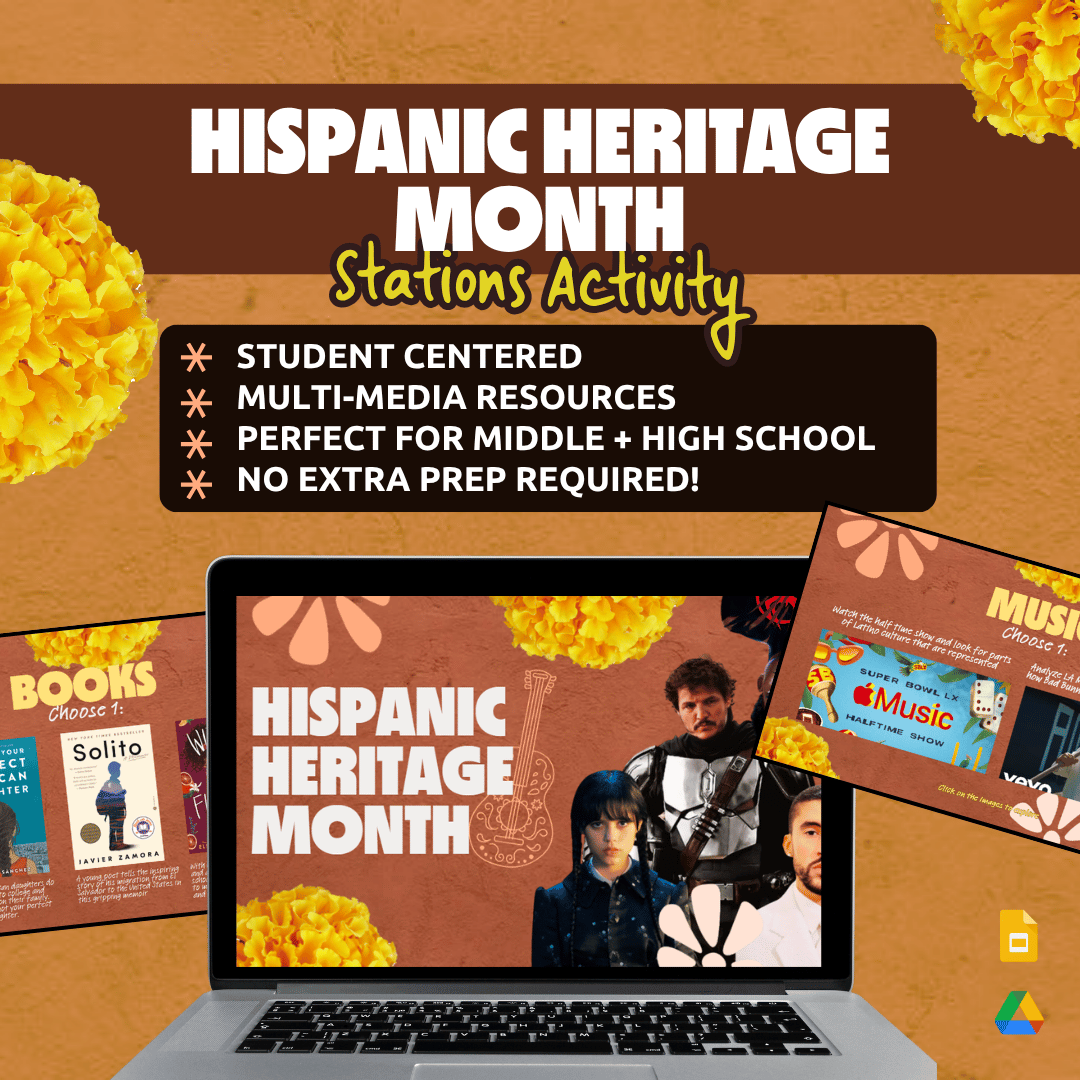
This Hispanic Heritage Month activity for middle school and high school features digital stations built around real music, film, literature, and interviews.
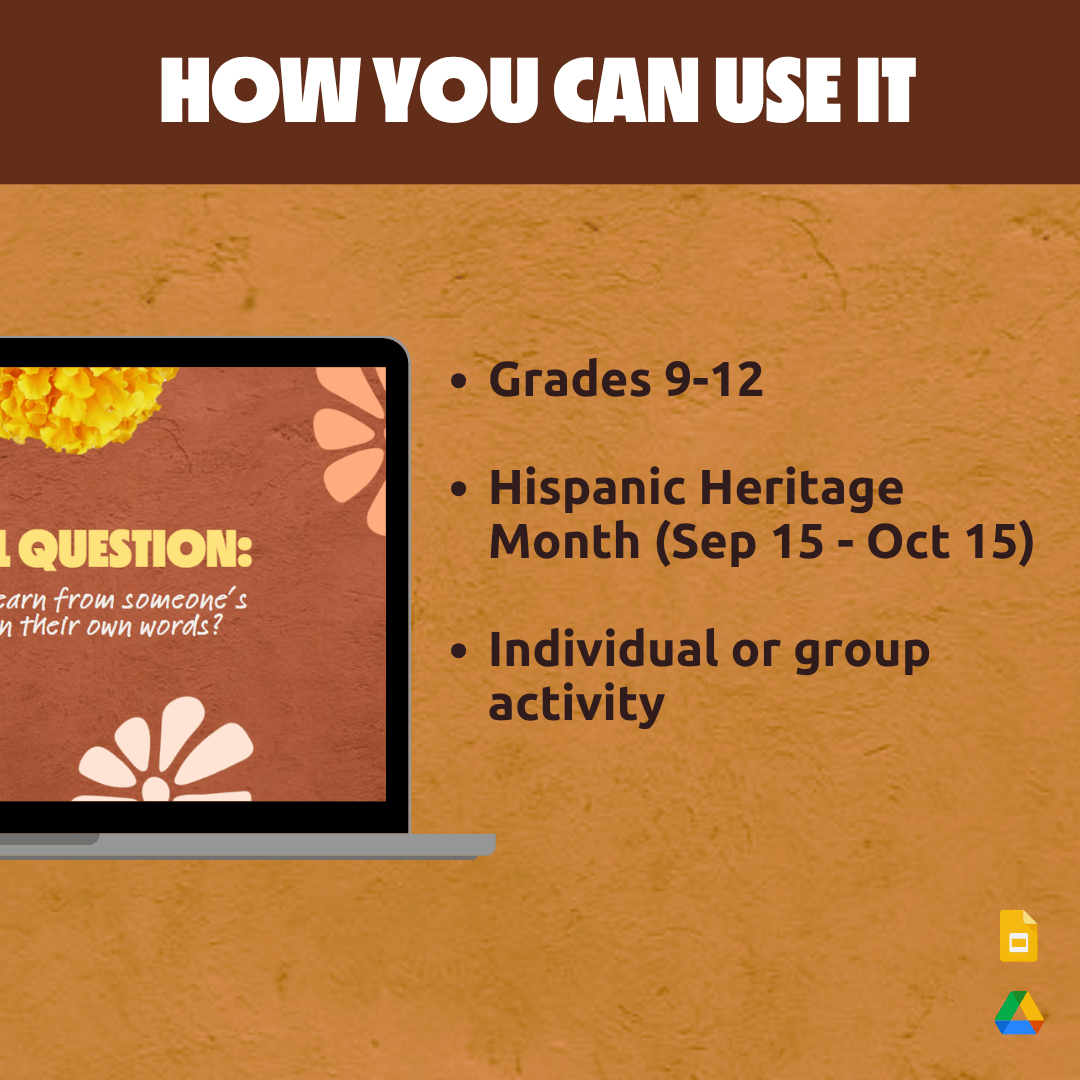
Students explore how Latine culture shows up in the pop culture they already know, from Bad Bunny’s Super Bowl halftime show to movies like Coco and Spider-Verse, plus authors and everyday people speaking in their own words. Then they reflect on the essential question: “What can we learn when we listen to people tell their own stories?”
BADGES: Editable Google Slides + printable PDF | No prep | Grades 6-12 | ELA, History, Advisory
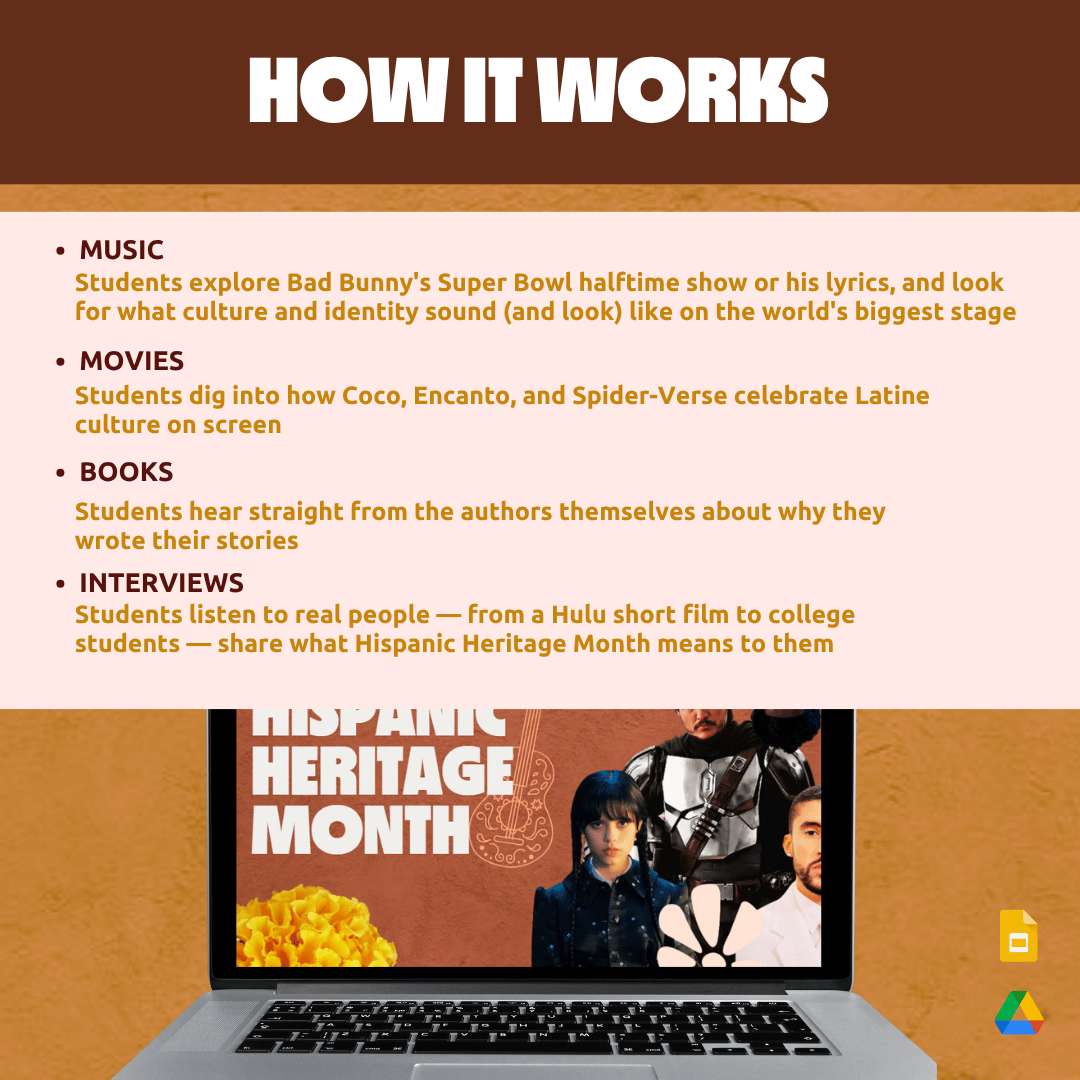
THE 4 STATIONS:
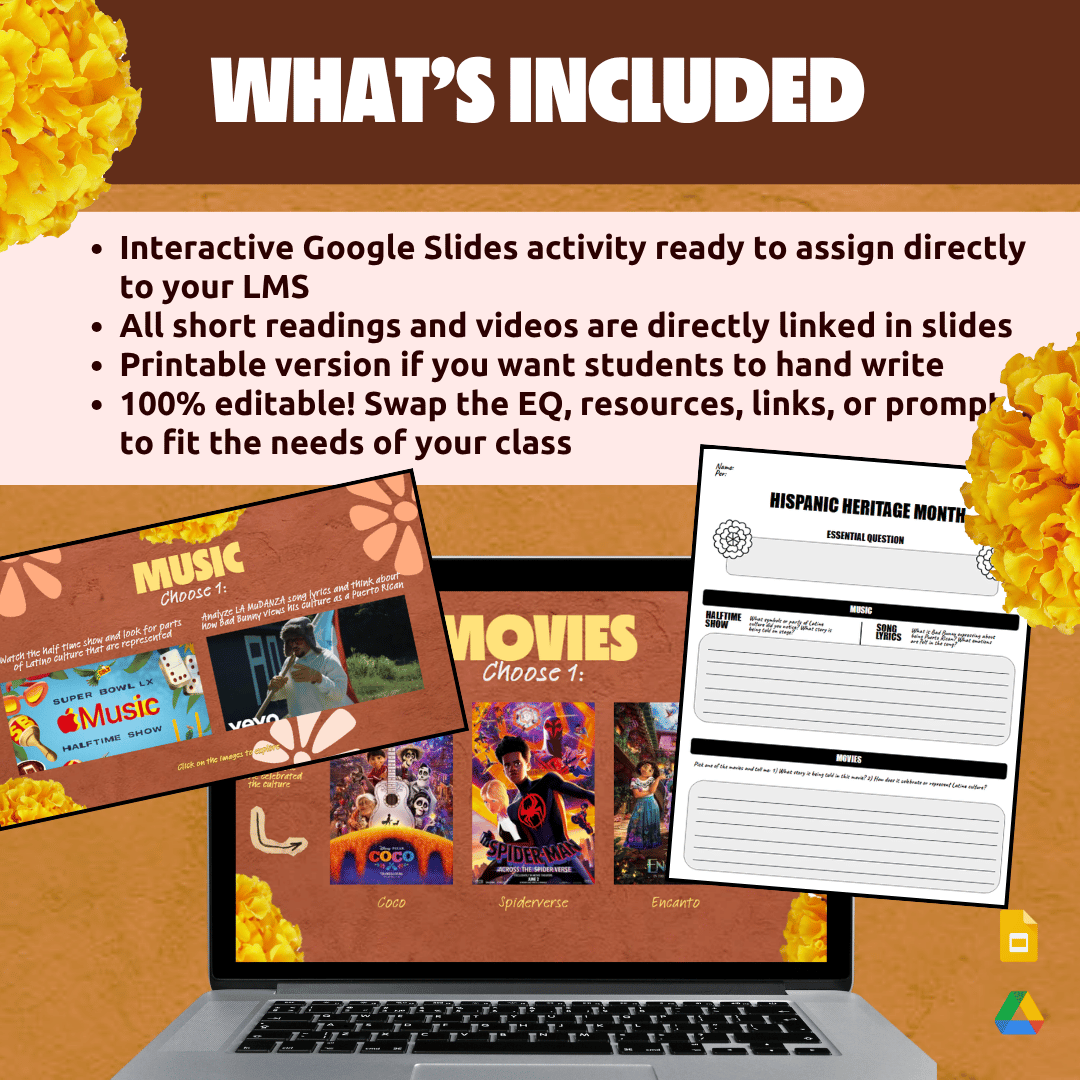
Music. Students choose their own path: watch Bad Bunny’s Super Bowl LX halftime show and identify the culture on display, or analyze his song “LA MuDANZA” and what he expresses about being Puerto Rican.
Movies. Students explore how Coco, Encanto, or Spider-Man: Across the Spider-Verse celebrate and represent Latine culture on screen.
Books. Students hear directly from the authors of I Am Not Your Perfect Mexican Daughter, Solito, and With the Fire on High, in their own words, about why they wrote their stories.
Interviews. Students watch real people (from a Hulu short film and Boston University students) share what Hispanic Heritage Month and their culture mean to them.
WHO IS THIS FOR?
Middle school and high school students
ELA, History, Advisory, or Homeroom
Any class covering identity, culture, current events, or media literacy
STUDENT SKILLS:
Analyze primary sources including music, film, interviews, and author testimony
Practice media literacy by examining how stories are told across different formats
Reflect and respond in writing, connecting each station back to the essential question
Compare perspectives and notice patterns in how culture and identity are represented
Build empathy by engaging directly with people’s own accounts of their own experiences
MAKE IT YOUR OWN:
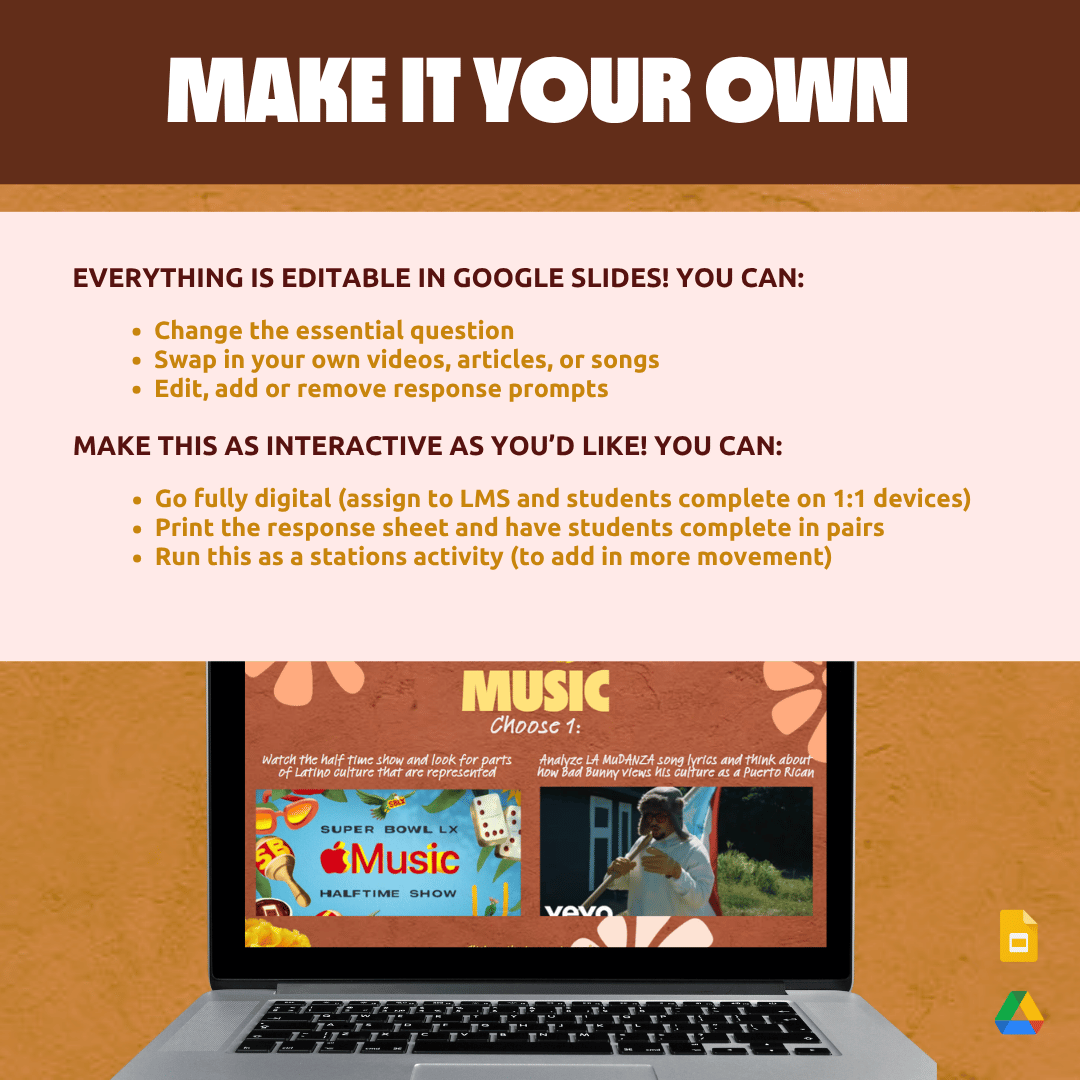
Make a copy in Google Slides and edit anything. Change the essential question, swap in your own videos or articles, edit the response prompts, or run it digitally (1:1) or on paper with the included printable. Every video, article, and interview is already linked, so students click through, explore, and respond.
REFUNDS:
Due to the nature of digital products, all sales are final and refunds are not available. Please review the product description and preview images carefully before purchasing. If you have trouble accessing your files, contact me at drea@deeplyhumanteaching.com and I’ll help resolve it.