
Earth Day Moon Activity | Artemis II
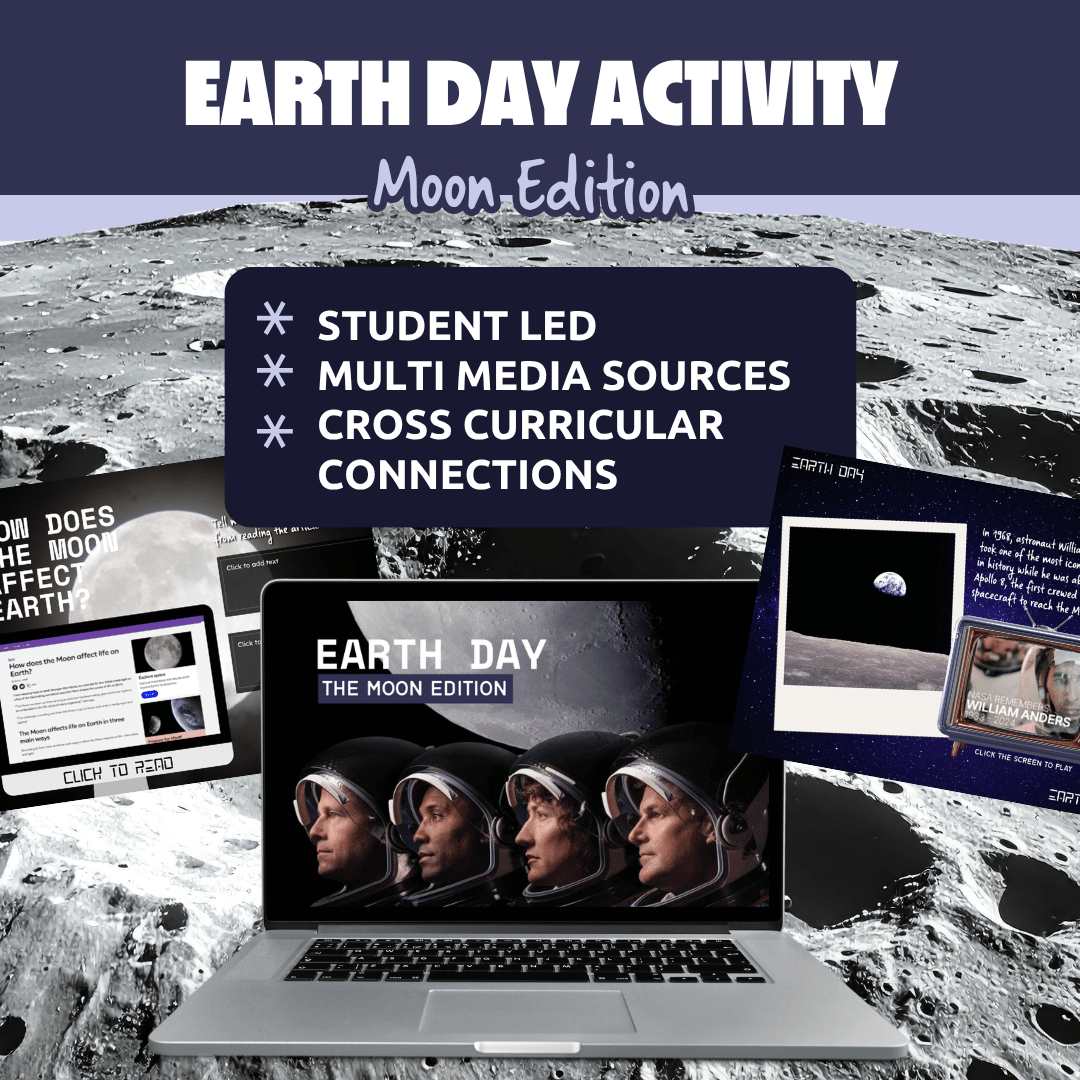
This no-prep Earth Day Google Slides activity for grades 7-12 takes students on a cross-curricular journey through lunar science, American history, and spoken word poetry — all tied together by one essential question: what's so special about the moon?
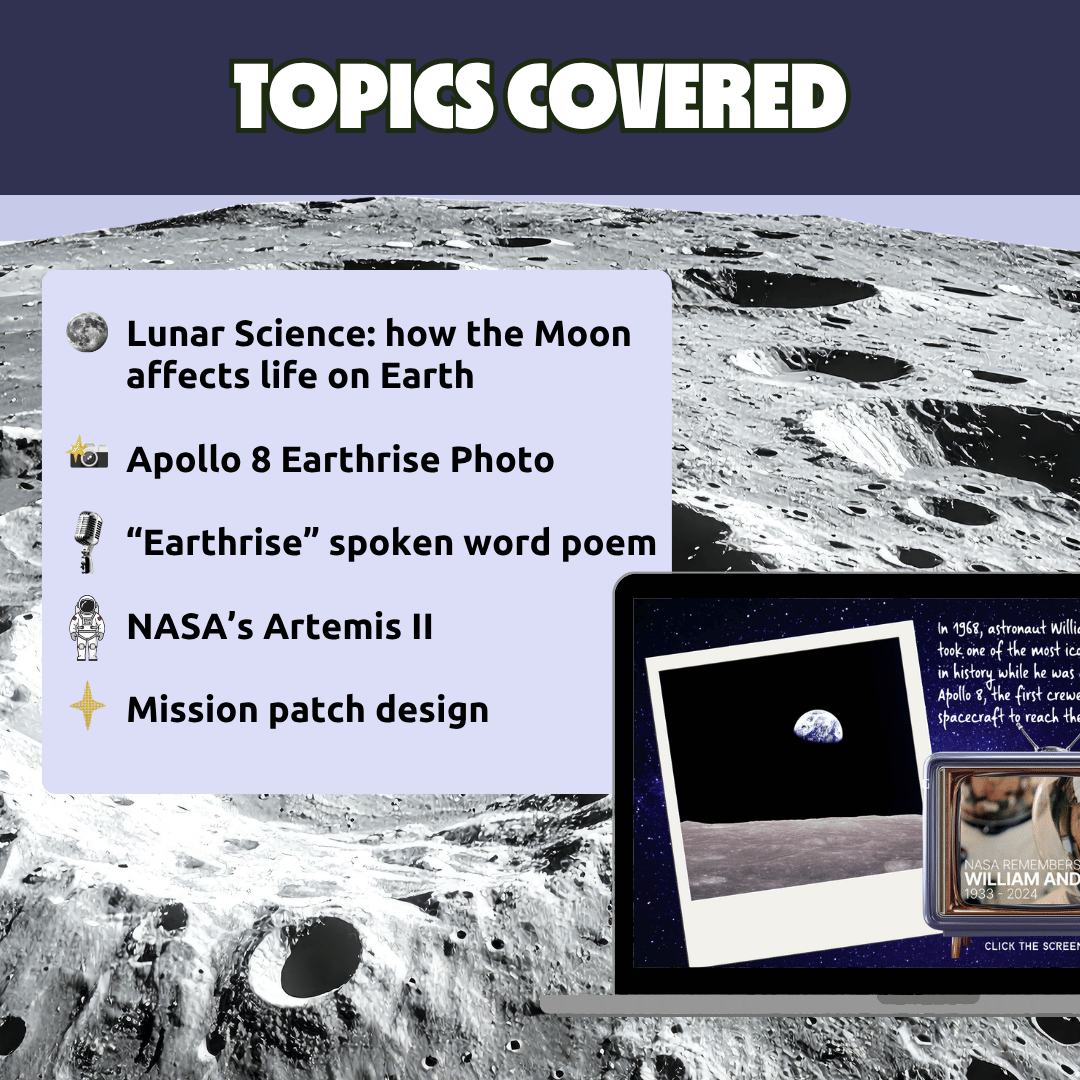
Students read a science article on how the moon affects life on Earth, learn the story behind NASA's iconic Earthrise photo from Apollo 8, respond to Amanda Gorman's spoken word poem "Earthrise," and zoom into the present day with NASA's Artemis II mission.
This editable, no-prep digital lesson works for ELA, Earth Science, US History, Environmental Science, or advisory in grades 7-12.
CROSS CURRICULAR CONNECTIONS:
HISTORY Take students back to 1968 when astronaut William Anders captured the iconic Earthrise photo aboard Apollo 8 — one of the most consequential images ever taken — and explore how seeing Earth from the Moon changed the way humans thought about the planet.
SCIENCE Discover how many of Earth's creatures depend on the Moon for survival — from tides to teeth — through a linked science article with a built-in student reflection activity.
ELA Analyze Amanda Gorman's spoken word poem "Earthrise" and debate whether humans still care enough to protect the planet. Discussion questions are fully editable so you can tailor them to your class.
ARTEMIS II + CREATIVE SYNTHESIS Students explore NASA's Artemis II — the first crewed mission to fly around the Moon since Apollo 8 — through linked NASA resources and current media, then close with a mission patch design task where they create an original patch for Artemis II and explain their choices using evidence from the lesson.
THIS PRODUCT INCLUDES:
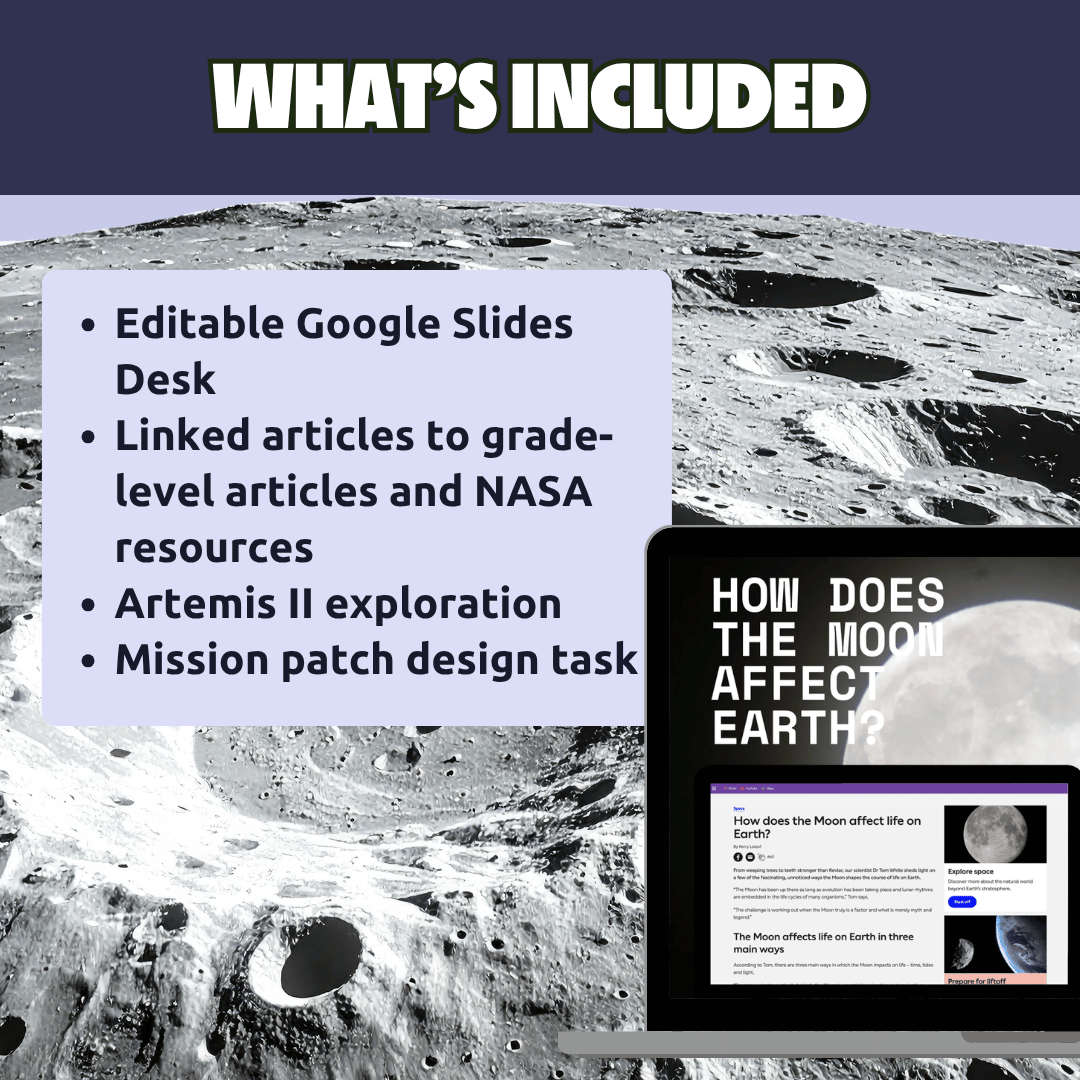
⭐ Editable Google Slides deck (12 slides) — all resources linked directly in the slides, no printing needed
⭐ Science article on how the Moon affects life on Earth with student reflection prompts
⭐ William Anders / Earthrise historical context slide with linked NASA video tribute
⭐ Amanda Gorman "Earthrise" poem analysis with editable discussion questions
⭐ Artemis II exploration slides with linked NASA resources and current media
⭐ "How Mission Patches Tell a Story" informational slide with real examples
⭐ Mission patch design task with written evidence-based reflection prompt
EASY TO ADAPT:
Essential question is fully editable
Discussion questions can be swapped out directly in the slides
Works as a one-day or two-day activity depending on your pacing
No printing, no prep — just assign and go
WHO IS THIS ACTIVITY FOR?
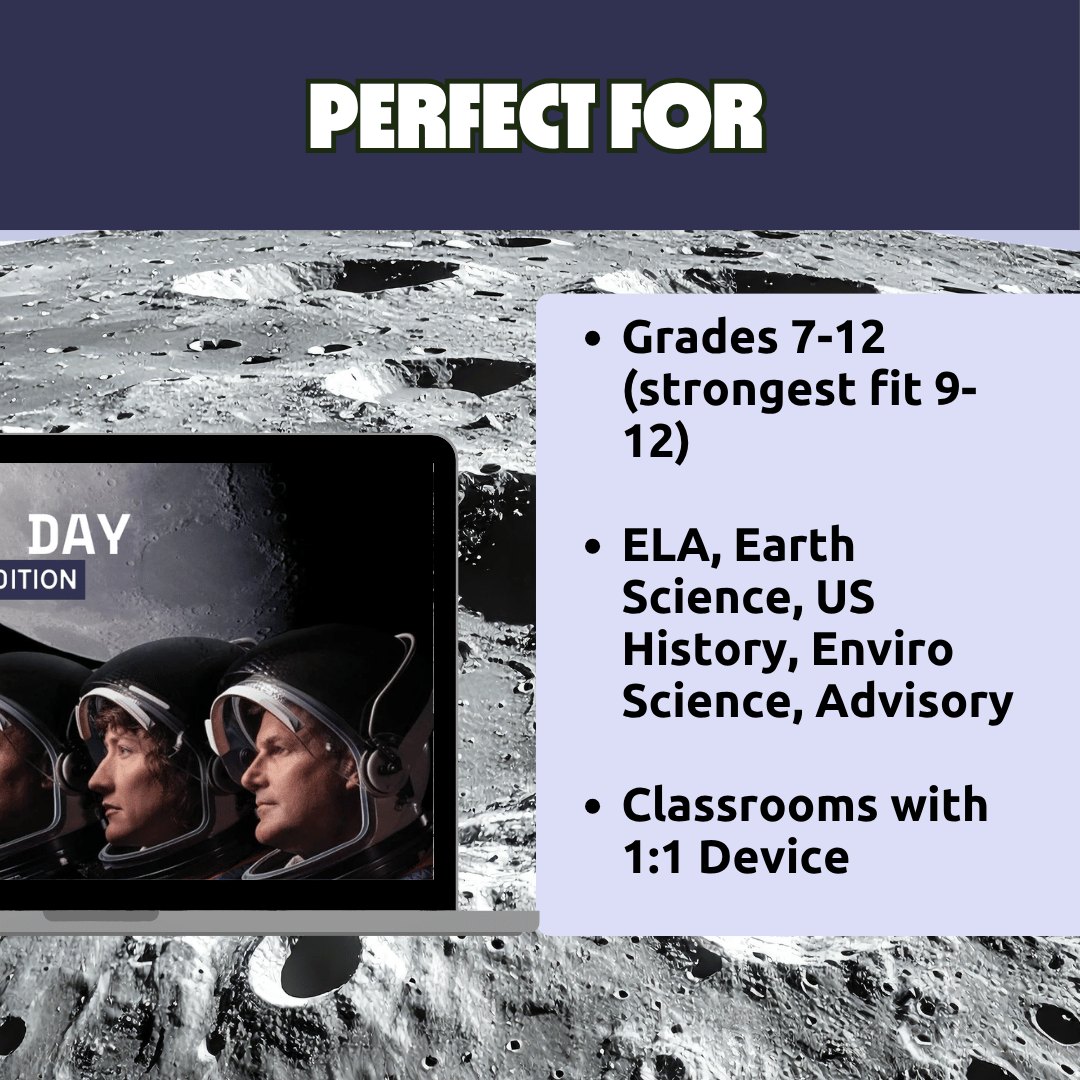
Any secondary teacher who wants a meaningful, low-lift Earth Day lesson that doesn't feel like filler. Works equally well in ELA, Earth Science, Environmental Science, US History, or advisory. Perfect for Earth Day on April 22 or any spring lesson when you want students thinking about the planet. Strongest fit for grades 9-12 but accessible for grades 7-8 with minimal support.
STUDENTS WILL:
✅ Read and respond to a real science article using text evidence
✅ Connect a historical event (Apollo 8) to its lasting cultural and environmental impact
✅ Analyze spoken word poetry for tone, argument, and author's perspective
✅ Evaluate a real NASA mission and its significance for Earth stewardship
✅ Synthesize learning into an original creative product with written evidence-based reasoning
Google Slides can be used on both PC and Mac but requires a Google account and internet access. Need one? Create a free account here: https://accounts.google.com/signup/v2/webcreateaccount?flowName=GlifWebSignIn&flowEntry=SignUp
This product is for PERSONAL USE ONLY.
This no-prep Earth Day Google Slides activity for grades 7-12 takes students on a cross-curricular journey through lunar science, American history, and spoken word poetry — all tied together by one essential question: what's so special about the moon?
Students read a science article on how the moon affects life on Earth, learn the story behind NASA's iconic Earthrise photo from Apollo 8, respond to Amanda Gorman's spoken word poem "Earthrise," and zoom into the present day with NASA's Artemis II mission.
This editable, no-prep digital lesson works for ELA, Earth Science, US History, Environmental Science, or advisory in grades 7-12.
CROSS CURRICULAR CONNECTIONS:
HISTORY Take students back to 1968 when astronaut William Anders captured the iconic Earthrise photo aboard Apollo 8 — one of the most consequential images ever taken — and explore how seeing Earth from the Moon changed the way humans thought about the planet.
SCIENCE Discover how many of Earth's creatures depend on the Moon for survival — from tides to teeth — through a linked science article with a built-in student reflection activity.
ELA Analyze Amanda Gorman's spoken word poem "Earthrise" and debate whether humans still care enough to protect the planet. Discussion questions are fully editable so you can tailor them to your class.
ARTEMIS II + CREATIVE SYNTHESIS Students explore NASA's Artemis II — the first crewed mission to fly around the Moon since Apollo 8 — through linked NASA resources and current media, then close with a mission patch design task where they create an original patch for Artemis II and explain their choices using evidence from the lesson.
THIS PRODUCT INCLUDES:
⭐ Editable Google Slides deck (12 slides) — all resources linked directly in the slides, no printing needed
⭐ Science article on how the Moon affects life on Earth with student reflection prompts
⭐ William Anders / Earthrise historical context slide with linked NASA video tribute
⭐ Amanda Gorman "Earthrise" poem analysis with editable discussion questions
⭐ Artemis II exploration slides with linked NASA resources and current media
⭐ "How Mission Patches Tell a Story" informational slide with real examples
⭐ Mission patch design task with written evidence-based reflection prompt
EASY TO ADAPT:
Essential question is fully editable
Discussion questions can be swapped out directly in the slides
Works as a one-day or two-day activity depending on your pacing
No printing, no prep — just assign and go
WHO IS THIS ACTIVITY FOR?
Any secondary teacher who wants a meaningful, low-lift Earth Day lesson that doesn't feel like filler. Works equally well in ELA, Earth Science, Environmental Science, US History, or advisory. Perfect for Earth Day on April 22 or any spring lesson when you want students thinking about the planet. Strongest fit for grades 9-12 but accessible for grades 7-8 with minimal support.
STUDENTS WILL:
✅ Read and respond to a real science article using text evidence
✅ Connect a historical event (Apollo 8) to its lasting cultural and environmental impact
✅ Analyze spoken word poetry for tone, argument, and author's perspective
✅ Evaluate a real NASA mission and its significance for Earth stewardship
✅ Synthesize learning into an original creative product with written evidence-based reasoning
Google Slides can be used on both PC and Mac but requires a Google account and internet access. Need one? Create a free account here: https://accounts.google.com/signup/v2/webcreateaccount?flowName=GlifWebSignIn&flowEntry=SignUp
This product is for PERSONAL USE ONLY.