
Daylight Saving Time | Mock Trial Activity
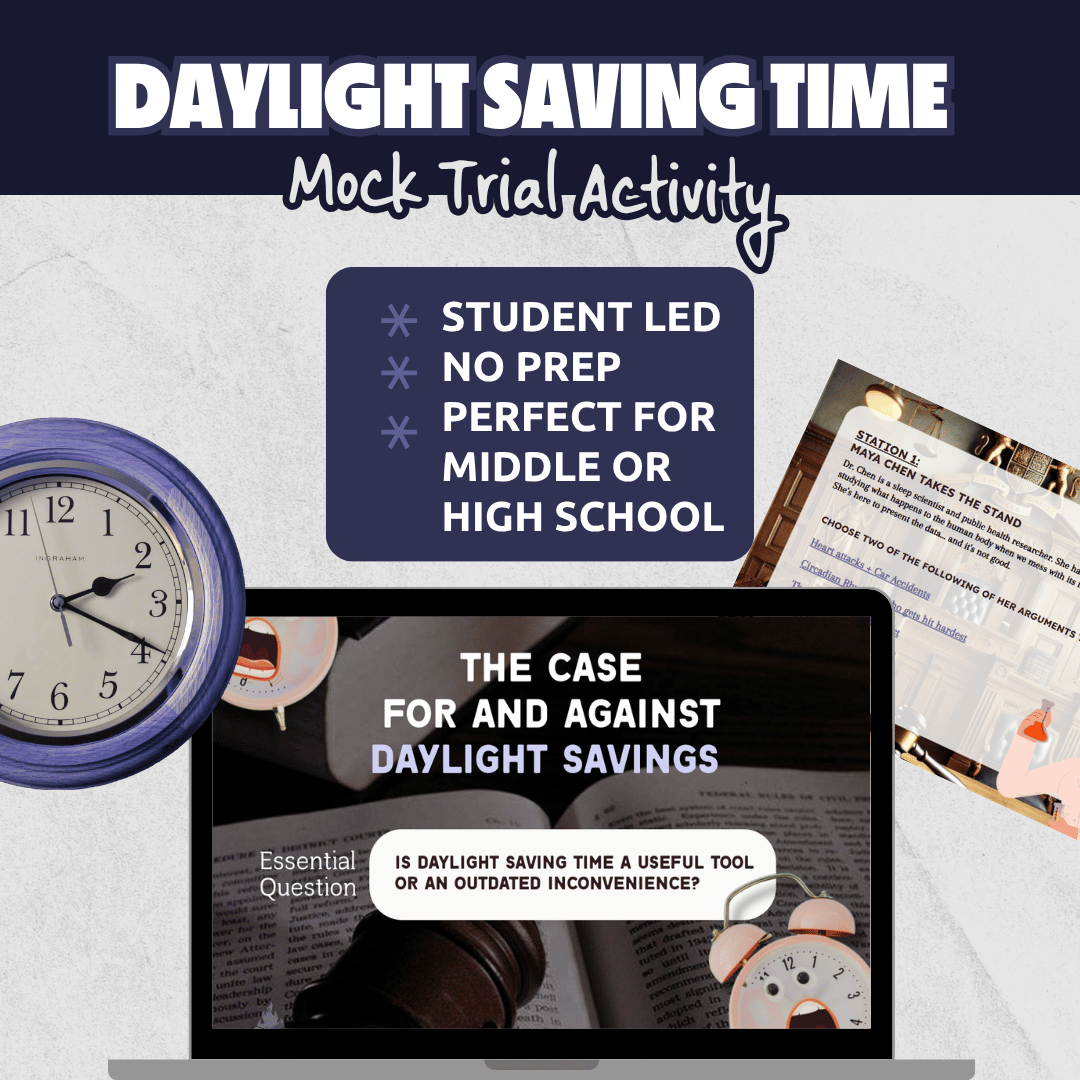
This Daylight Saving Time activity for middle school and high school puts students on a jury to decide whether DST is a useful tool or an outdated inconvenience.
In this mock trial inquiry activity, students hear testimony from four expert witnesses covering science, history, Indigenous community perspectives, and public policy — then deliver their own evidence-based verdict.
This no-prep current events lesson works for US History, Government, Civics, Science, ELA, or advisory in grades 6–12. The Google Slides are editable for you to change the links or questions!
Every student has an opinion about Daylight Saving Time — they just lost an hour of sleep, they're annoyed, and they want to know why we still do this. This activity takes that energy and turns it into an actual inquiry. Instead of a lecture about the history of time zones, students are called to jury duty and have to weigh real testimony before rendering a verdict they can defend.
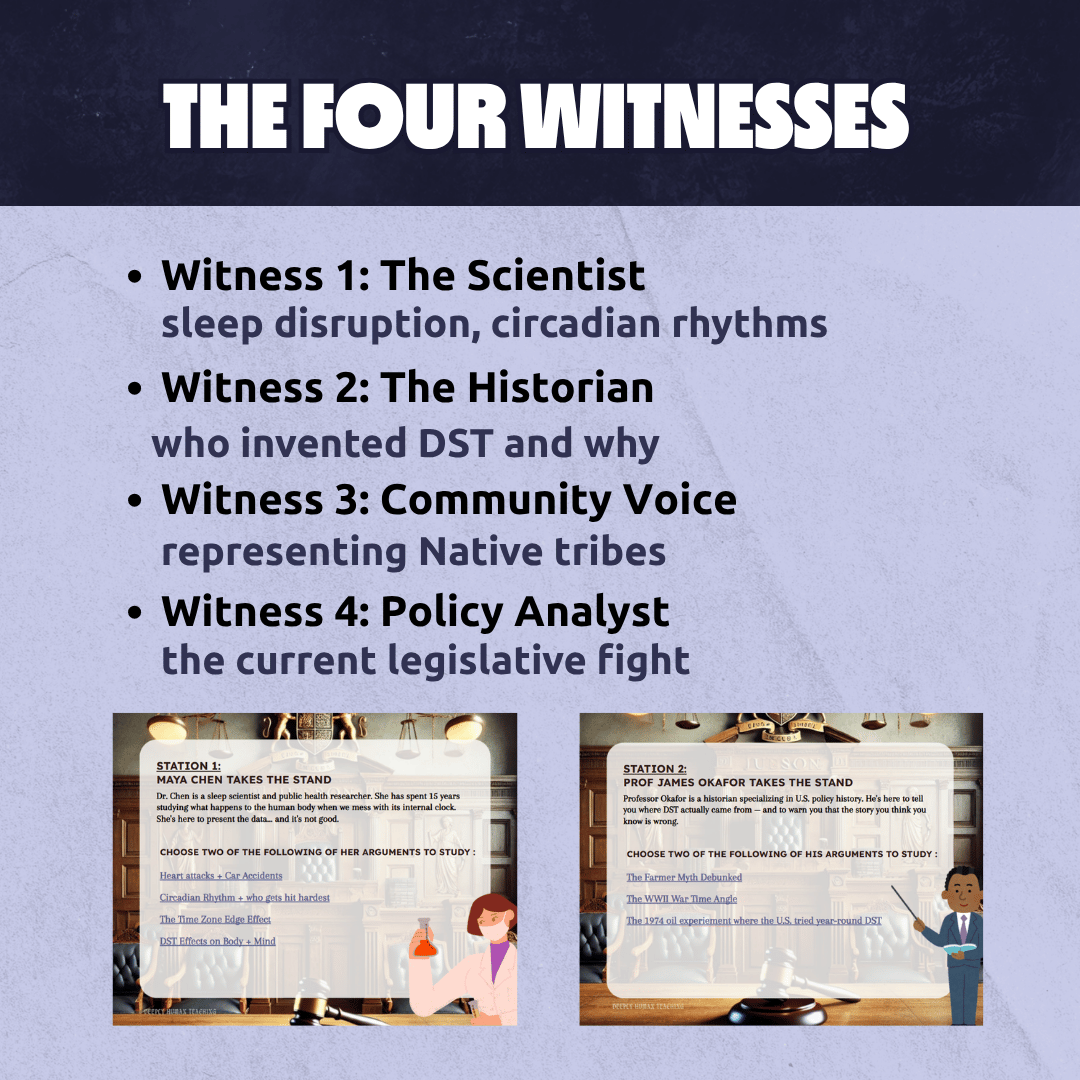
THE FOUR WITNESSES:
⚖️ Witness 1 — The Scientist
Testimony on what DST does to the human body — sleep disruption, circadian rhythms, and the documented health effects of the time change. Students examine actual data on the biological cost of shifting the clock.
⚖️ Witness 2 — The Historian
The real origin story of DST — who proposed it, why, and how wartime energy policy became a permanent feature of modern life. Students discover that the reasons we started doing this may not be the reasons we kept doing it.
⚖️ Witness 3 — The Community Voice
Indigenous perspectives on DST — specifically the Navajo Nation and Hopi Tribe, whose overlapping reservations handle time differently. Students confront how a federal policy affects communities that didn't ask for it and don't all agree on it.
⚖️ Witness 4 — The Policy Analyst
The current legislative fight over DST — which states want to ditch it, which want to keep it, and why Congress can't seem to settle the question. Students engage with public policy as something happening right now, not just a textbook concept.
THE CULMINATING ACTIVITY:
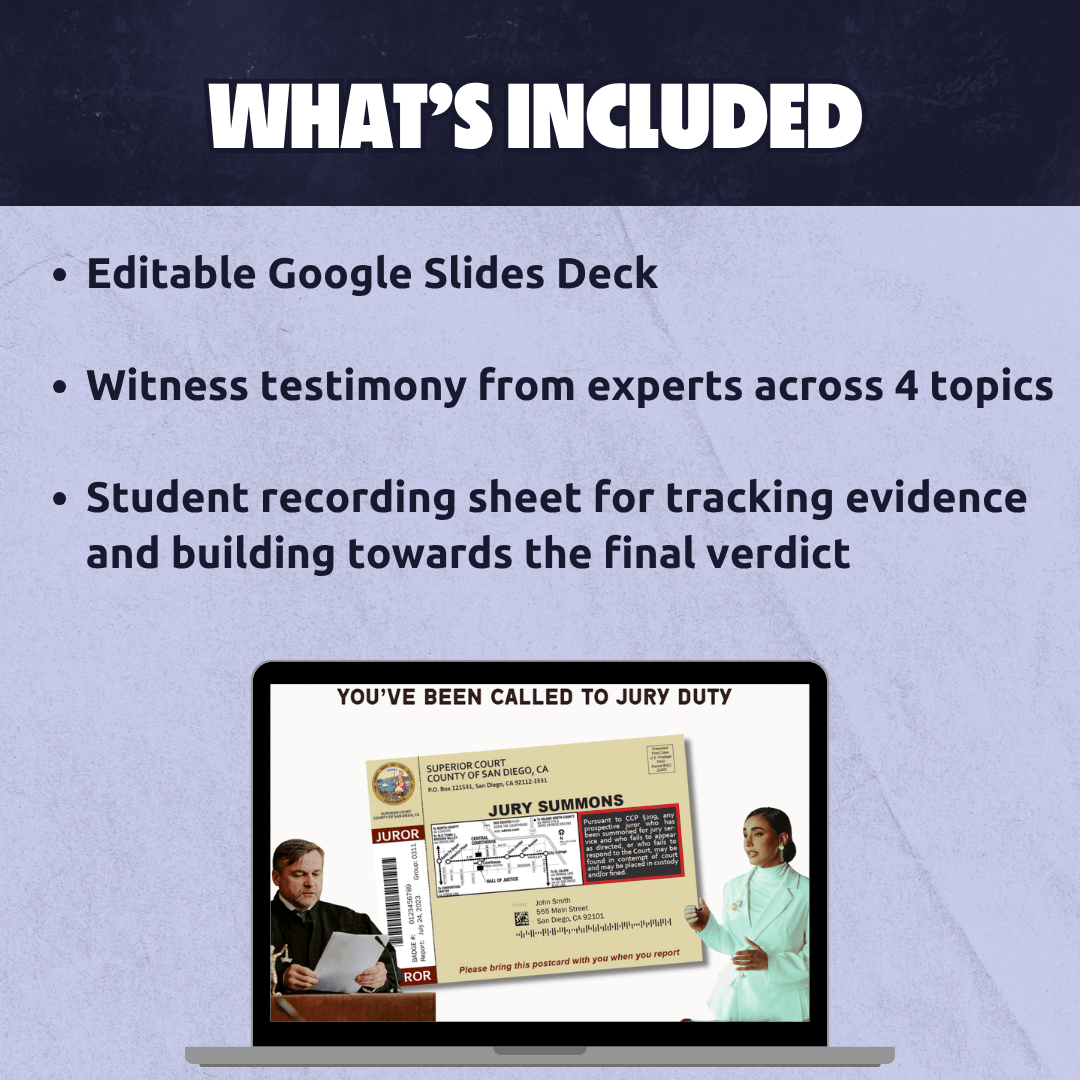
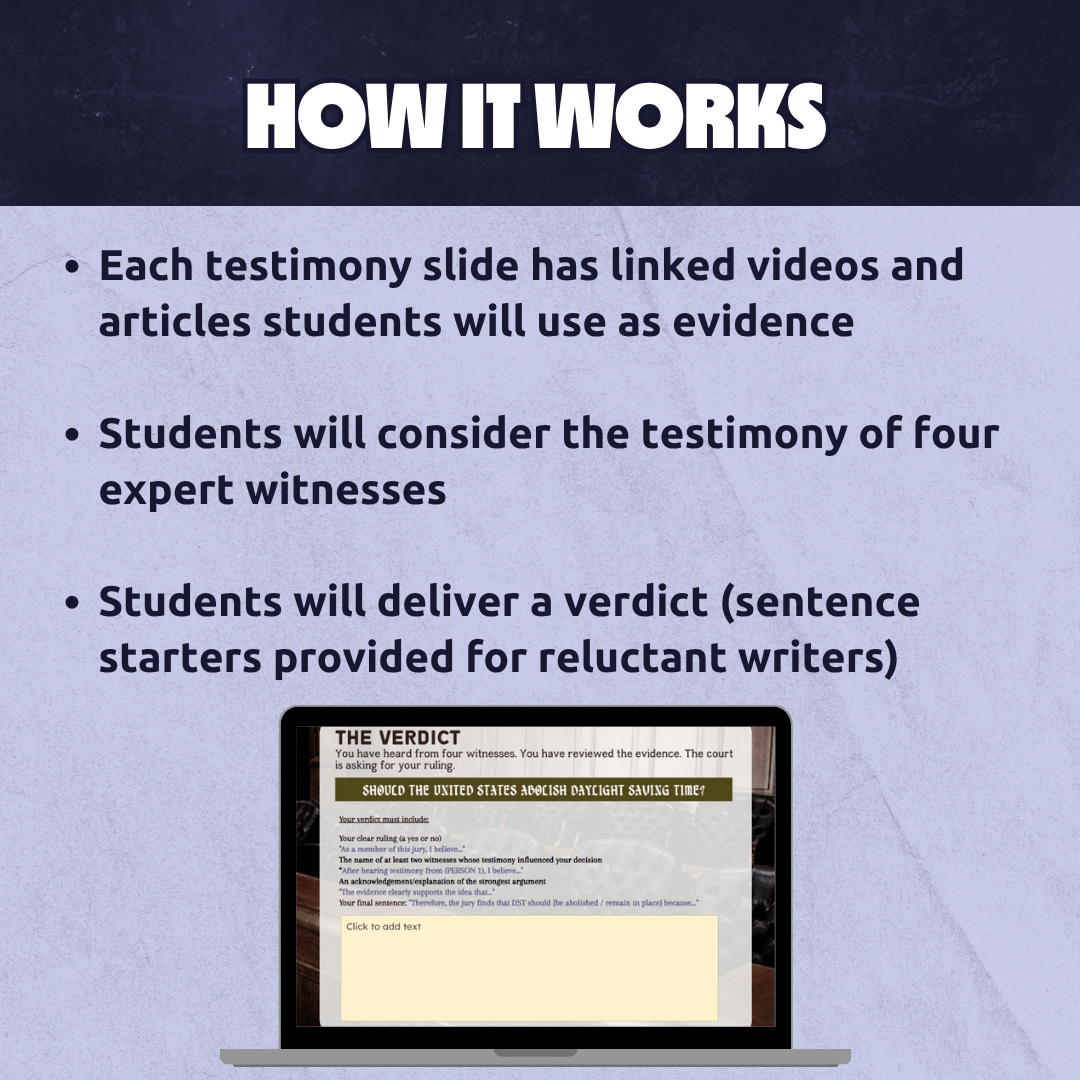
After hearing all four witnesses, students deliver their own evidence-based verdict.
WHO IS THIS ACTIVITY FOR?
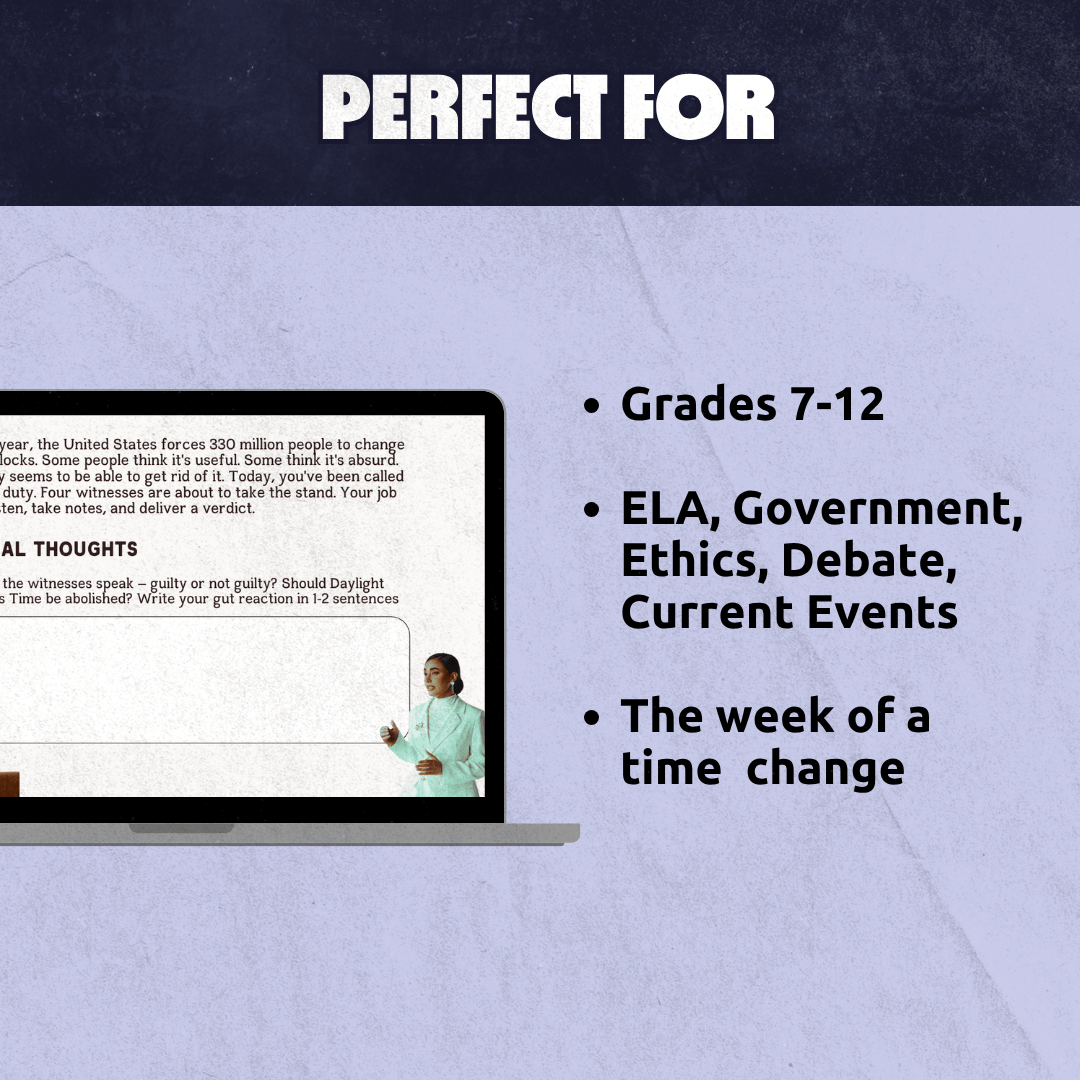
This mock trial activity is built for middle school and high school students (grades 6–12) across multiple subjects. The four witnesses cover science, history, civics, and community perspectives — which means this resource fits naturally into almost any classroom during the week of the time change.
Works for: US History, Government, Civics, Science, ELA, Advisory, Homeroom, Debate, or any class covering current events and public policy.
STUDENT SKILLS:
✅ Students weigh testimony from multiple expert perspectives before forming a position — not after
✅ Students engage with Indigenous community perspectives (Navajo and Hopi) on a federal policy most people never question
✅ Students analyze the intersection of science, history, and public policy on a single issue
✅ Students practice civic literacy by examining real legislation currently being debated
✅ Students deliver a verdict they have to defend with evidence — "I don't like waking up early" doesn't count
Google Slides can be used on both PC and Mac but requires a Google account and internet access. Need one? Create a free account here: https://accounts.google.com/signup/v2/webcreateaccount?flowName=GlifWebSignIn&flowEntry=SignUp
This product is for PERSONAL USE ONLY.
This Daylight Saving Time activity for middle school and high school puts students on a jury to decide whether DST is a useful tool or an outdated inconvenience.
In this mock trial inquiry activity, students hear testimony from four expert witnesses covering science, history, Indigenous community perspectives, and public policy — then deliver their own evidence-based verdict.
This no-prep current events lesson works for US History, Government, Civics, Science, ELA, or advisory in grades 6–12. The Google Slides are editable for you to change the links or questions!
Every student has an opinion about Daylight Saving Time — they just lost an hour of sleep, they're annoyed, and they want to know why we still do this. This activity takes that energy and turns it into an actual inquiry. Instead of a lecture about the history of time zones, students are called to jury duty and have to weigh real testimony before rendering a verdict they can defend.
THE FOUR WITNESSES:
⚖️ Witness 1 — The Scientist
Testimony on what DST does to the human body — sleep disruption, circadian rhythms, and the documented health effects of the time change. Students examine actual data on the biological cost of shifting the clock.
⚖️ Witness 2 — The Historian
The real origin story of DST — who proposed it, why, and how wartime energy policy became a permanent feature of modern life. Students discover that the reasons we started doing this may not be the reasons we kept doing it.
⚖️ Witness 3 — The Community Voice
Indigenous perspectives on DST — specifically the Navajo Nation and Hopi Tribe, whose overlapping reservations handle time differently. Students confront how a federal policy affects communities that didn't ask for it and don't all agree on it.
⚖️ Witness 4 — The Policy Analyst
The current legislative fight over DST — which states want to ditch it, which want to keep it, and why Congress can't seem to settle the question. Students engage with public policy as something happening right now, not just a textbook concept.
THE CULMINATING ACTIVITY:
After hearing all four witnesses, students deliver their own evidence-based verdict.
WHO IS THIS ACTIVITY FOR?
This mock trial activity is built for middle school and high school students (grades 6–12) across multiple subjects. The four witnesses cover science, history, civics, and community perspectives — which means this resource fits naturally into almost any classroom during the week of the time change.
Works for: US History, Government, Civics, Science, ELA, Advisory, Homeroom, Debate, or any class covering current events and public policy.
STUDENT SKILLS:
✅ Students weigh testimony from multiple expert perspectives before forming a position — not after
✅ Students engage with Indigenous community perspectives (Navajo and Hopi) on a federal policy most people never question
✅ Students analyze the intersection of science, history, and public policy on a single issue
✅ Students practice civic literacy by examining real legislation currently being debated
✅ Students deliver a verdict they have to defend with evidence — "I don't like waking up early" doesn't count
Google Slides can be used on both PC and Mac but requires a Google account and internet access. Need one? Create a free account here: https://accounts.google.com/signup/v2/webcreateaccount?flowName=GlifWebSignIn&flowEntry=SignUp
This product is for PERSONAL USE ONLY.