
I REBUILT MY CLASS DISCUSSION FORMAT BECAUSE SOCRATIC SEMINARS WEREn’T WORKING
This three-role discussion format gives everyone a job and even the quietest kid in class feels included
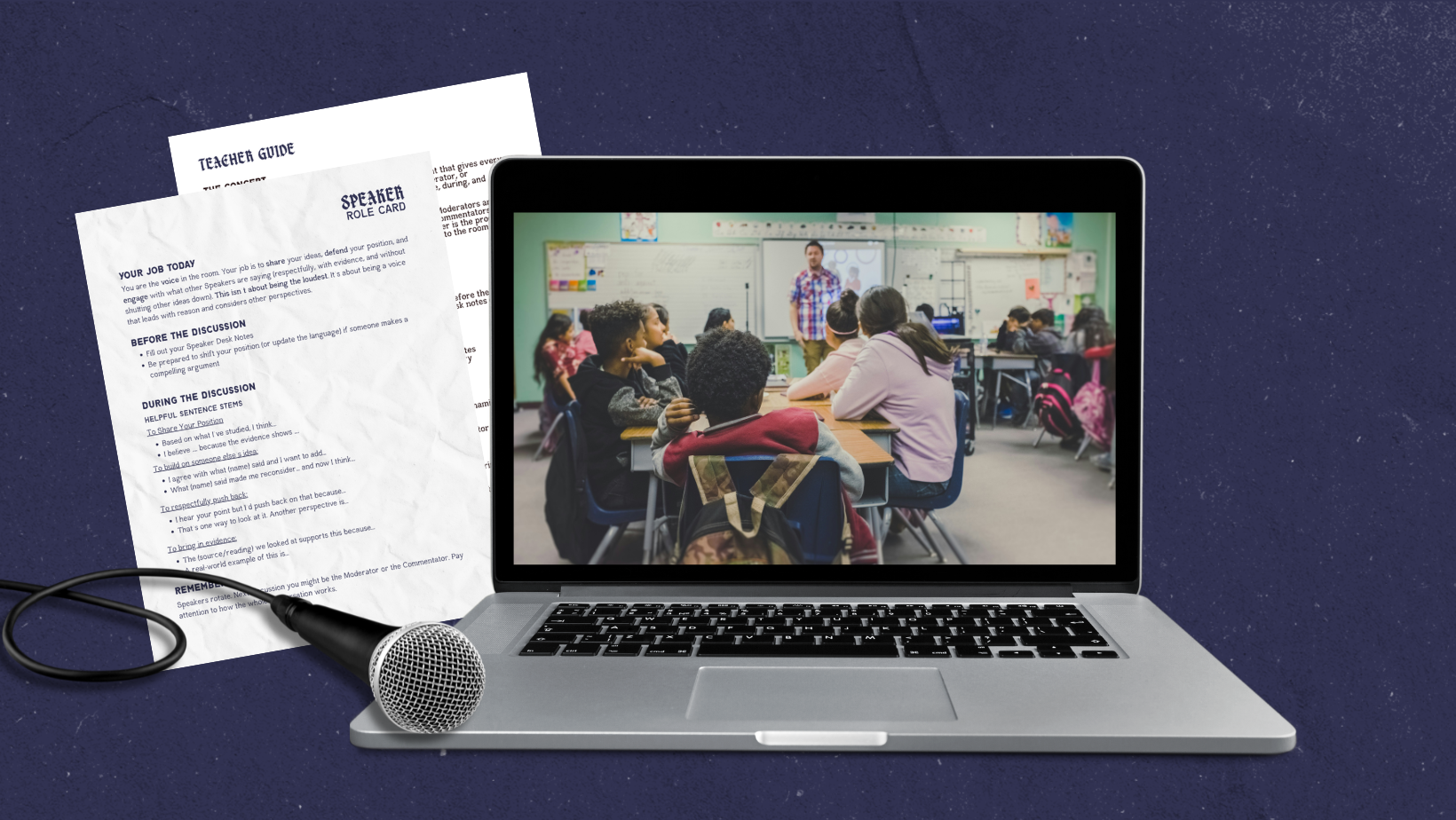
Every teacher has one. The class where you ask a question and get a whole lot of silence before someone finally says something just to end the suffering.
I tried Socratic seminar. I tried fishbowl. I tried think-pair-share. It’s no secret that (especially post COVID) discussions end up being a big pain point in the classroom. It’s hard for teachers to keep tweaking the format and doing the trial-and-error dance. It’s hard for students to track discussions and figure out what to say.
Here's what I kept running into: most discussion formats only have one real job - speaker. And if talking in front of your peers isn't your thing, you're basically a spectator for the whole period. Spectators check out. And honestly, I can't blame them.
So I rebuilt the whole thing.
THE NEWSROOM DISCUSSION
The Newsroom Discussion splits students into three roles. Every person has a specific job and every job matters.
Here's how it works.
The Three Roles
The Speaker
The Speaker is the voice in the room. Their job is to present ideas, defend their position, and engage with what other Speakers are saying - with evidence, and without shutting anyone down.
Speakers get sentence stems that help them build on ideas, push back gracefully, and hold their position under pressure.
The Moderator
The Moderator is the anchor. They're tracking the conversation, taking notes on the main arguments, and they're the ones who redirect the discussion when it stalls or goes sideways.
When the conversation runs dry, I don't jump in. I turn to the Moderators. "What question do you want to pose to the Speakers?" Suddenly the students are running the room, not me. The Moderator role has a way of turning the quietest kid in class into the most powerful person in the discussion.
The Commentator
The Commentator provides live commentary from the sideline. They're connecting ideas to real life, capturing the moments worth remembering, and offering the kind of hot-take analysis you'd hear from a pundit in the corner of a news broadcast.
Sentence stems like "this reminds me of... because..." and "hot take: what was just said basically means..." give students permission to have opinions. For the kids who have a lot to say but hate being put on the spot, the Commentator role is everything.
How the Rotation Works
Every time you run a Newsroom Discussion, students rotate roles. By the third discussion of the unit, every student has been a Speaker, a Moderator, and a Commentator. Every student has practiced arguing, facilitating, and analyzing. And every student has a reason to stay locked in the whole time - because next discussion, that's their job.
The Topics That Make It Sing
The Newsroom Discussion works best with high-interest essential questions - the kind students would argue about outside of class anyway.
"Is social media doing more harm than good?" "Does cancel culture go too far?" "Is the American Dream still real?" "To what extent is aggression necessary for real change?"
Check out my blog posts about Essential Questions to learn more about it.
WHAT’S INSIDE THE NEWSROOM DISCUSSION PACK
The Newsroom Discussion Pack on TpT includes everything you need to run this tomorrow - three role cards with job descriptions in student-friendly language, sentence stems for each role, a teacher guide with rotation instructions and facilitation tips, and a discussion reflection slip students complete the discussion activity.
Works for US History, World History, Government, ELA, Psychology - any class where the content raises real questions worth arguing about.
Grab the Newsroom Discussion Pack in the Deeply Human Teaching TpT shop.
Drea